Downsize Without Downgrading: The Quiet 14-Inch Victory in 2026

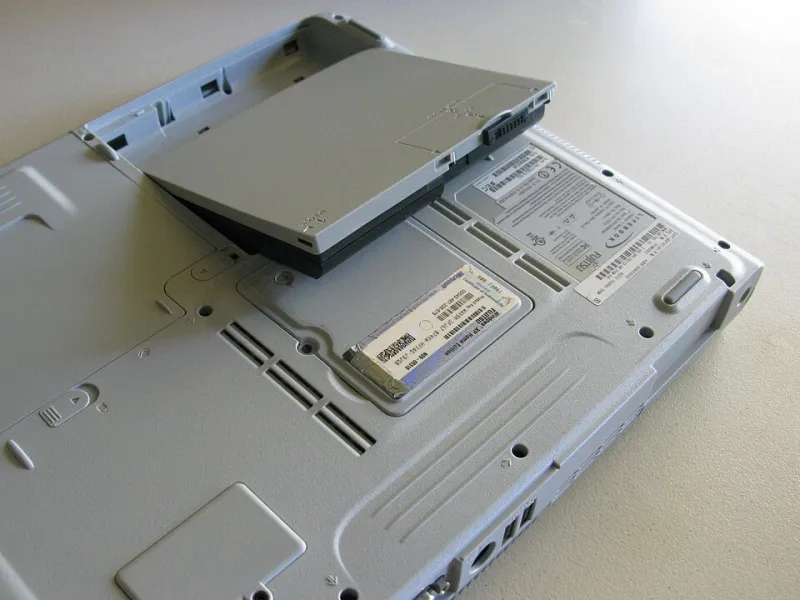
Photo: Wilfredor, CC0, via Wikimedia Commons
There is a particular kind of UK laptop shopper who does not want a project. They want a machine that fits on a train table, survives a rucksack, lasts a working day and does not cost the earth. For years, that shopper was nudged towards 15.6 inches because it looked like more laptop for the money. In 2026, that logic is wobbling. The 14-inch machine has quietly become the better bet for most people — and the refurbished business market is a big part of the reason.
The default that stopped making sense
A 15.6-inch laptop is not automatically a bad buy. Plenty of them are perfectly decent. The problem is that the size has spent years being used as a marketing shortcut: big screen, low price, move along. Too often, the money has gone into the panel rather than the parts around it. You get a chassis that feels like a tray, a battery that has been sized for a spreadsheet rather than a train journey, and a port selection that assumes you own a drawer full of dongles.
Meanwhile, 14-inch business laptops have been arriving on the refurbished market in serious numbers. These are the machines that were bought by offices, leased for three years and then sold on in bulk. Models like the ThinkPad T14, HP EliteBook 840 and Dell Latitude 7000 series were designed for people who actually carry laptops around. That design brief shows.
Weight is not a spec sheet vanity metric
A 14-inch business laptop usually lands somewhere around 1.2kg to 1.4kg. A budget 15.6-inch consumer model often sits nearer 1.7kg to 2kg once you factor in the charger. That difference sounds small until you are standing on a packed Northern line service, or walking from a campus library to a seminar room with a bag already full of books.
The same applies to home workers who move between rooms. A laptop that lives on a desk does not need to be light. A laptop that follows you to the kitchen table, the sofa and the occasional train does. Fourteen inches is the size where a machine still feels substantial enough to type on for an afternoon, but light enough that you stop noticing it in your bag.
Battery life: the business-class advantage
Here is where refurbished 14-inch models often pull ahead of cheap new 15.6-inch rivals. Business laptops tend to have larger batteries and more efficient processors because they were built for a working day away from a plug. A well-chosen 14-inch refurb with a healthy battery can realistically manage eight to ten hours of light work — web browsing, email, documents, a bit of video. That is not a promise for every machine, and battery health varies enormously on second-hand stock. Always ask for a cycle count or a health report if you are buying refurbished.
A budget 15.6-inch new laptop can still be a fine desk-bound machine, but it is often the wrong tool for a commute. If the battery is small and the panel is hungry, you end up carrying the charger anyway. At that point, the weight advantage of the bigger screen has already disappeared.
Screen comfort is about shape as much as size
The old 15.6-inch default usually meant a 16:9 panel. Fine for films, less fine for documents, spreadsheets and web pages. Many 14-inch business machines now use a taller 16:10 or 3:2 shape, which gives you more vertical room for text. A 14-inch 1920x1200 panel can feel more comfortable for work than a 15.6-inch 1366x768 panel, even though the diagonal number is smaller.
This is the bit shoppers miss. Screen quality is not just about inches. It is about resolution, brightness, matte versus glossy, and whether the panel makes text look crisp at normal viewing distance. A good 14-inch screen beats a poor 15.6-inch screen every time. If you are buying refurbished, check the exact panel specification rather than assuming all models in a range are the same.
Ports: the boring advantage that matters
Consumer laptops have spent years thinning out. Business 14-inch machines often still give you USB-A, HDMI, USB-C with charging, and sometimes Ethernet. That means you can plug in a projector, a mouse and a monitor without a hub. For students, home workers and small offices, that is not nostalgia. It is convenience.
If you are choosing between a sleek 15.6-inch consumer laptop with two USB-C ports and a refurbished 14-inch business model with a proper spread of connections, think hard about your actual desk. A docking station can solve the problem, but it is another cost. The 14-inch business machine often solves it in the box.
The UK pricing reality
In 2026, the refurbished 14-inch business laptop market is genuinely competitive. Depending on specification, condition and warranty, you can find solid machines in the £300 to £500 bracket. New 14-inch laptops start higher, often £500 to £800 for something with a decent screen and battery. Budget 15.6-inch new laptops can undercut both, but the compromise usually shows up in the panel, the build or the battery.
The smart question is not “which is cheapest?” It is “which is cheapest to live with?” A £350 refurbished 14-inch laptop with a good battery and a one-year warranty can be better value than a £380 new 15.6-inch machine that feels tired by the second year. That is especially true if you are comfortable with a few scuffs and a machine that was built for work rather than shelf appeal.
When a 15.6-inch laptop still makes sense
None of this is a blanket rule. A bigger screen still earns its place if the laptop is essentially a desktop replacement. If you edit video, work with large spreadsheets, or rarely move the machine, a 15.6-inch or even 16-inch panel is easier on the eyes. If you need a numeric keypad, a 15.6-inch chassis is often the only way to get one without an external keyboard.
There is also the question of eyesight and comfort. Some people simply prefer a larger display at arm’s length, and no amount of portability logic changes that. The point is to choose deliberately rather than defaulting. A 15.6-inch laptop bought for a desk is fine. A 15.6-inch laptop bought for a daily commute is often a compromise you feel every morning.
The Just4Laptops take
For most UK students, commuters and home workers, 14 inches is the sensible centre in 2026. It is light enough to carry, big enough to work on, and well served by refurbished business stock. If you are buying new, compare the panel and battery rather than the diagonal number. If you are buying refurbished, check the battery health, the exact screen specification and the warranty. And if you genuinely work at a desk all day, buy the bigger screen — just do it on purpose.
The laptop that suits your life is rarely the one with the biggest number on the sticker. More often, it is the one you stop noticing you are carrying.